Overdue invoice chase
4× a monthThousands of dollars sits in outstanding and overdue invoices — and chasing it means texting people one at a time.
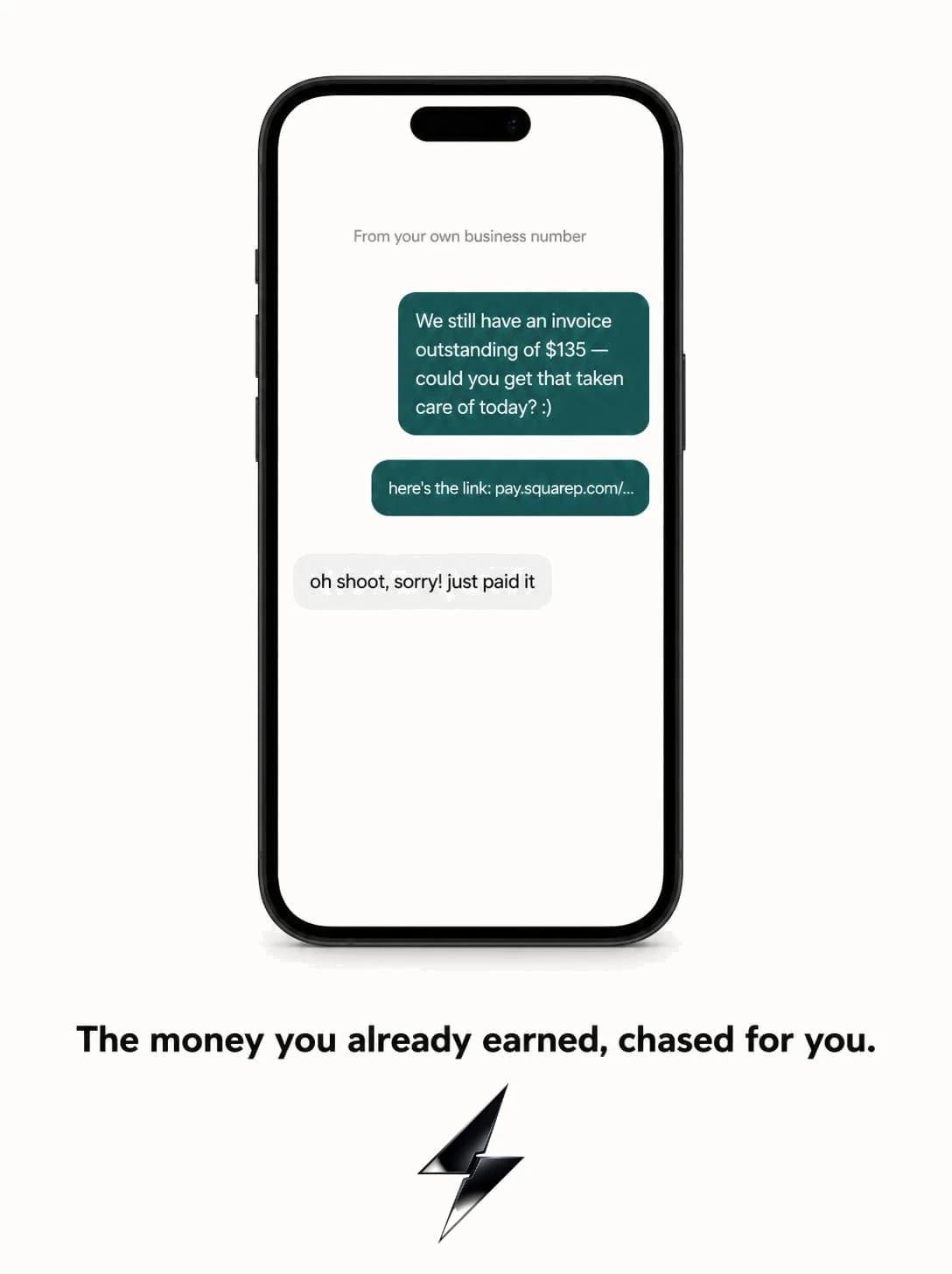
$1,000s in invoices chased every month · $975 found in the first sweep
Operators · we fix how your business runs
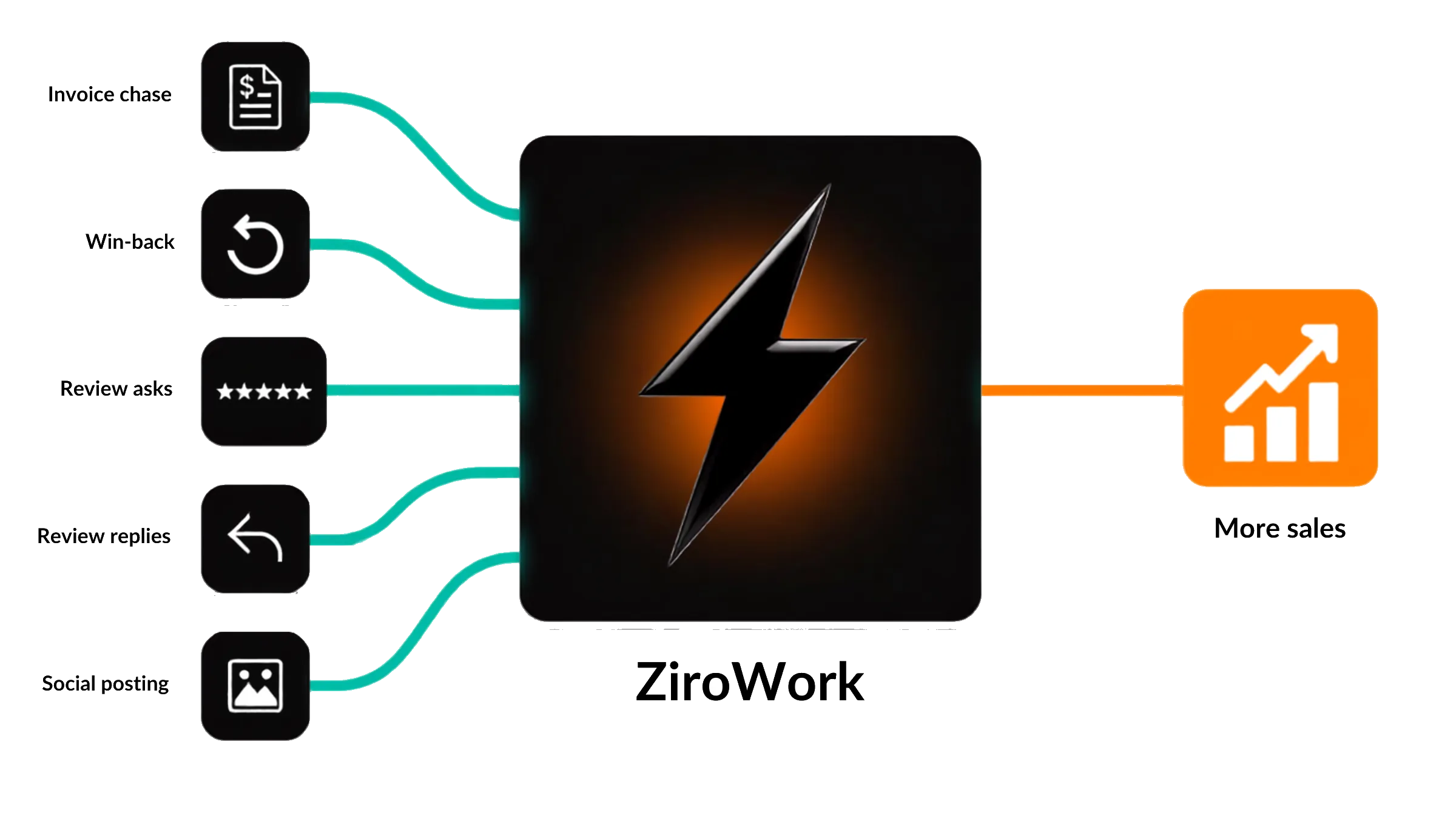
We teach your staff how to sell. We build the systems that chase the invoices, ask for the reviews and handle the follow-up on their own. And we get the operation organized so it stops living in your head.
We cap it at 10 clients so every one works directly with us — not a handoff to someone you have never talked to. 0 of 10 taken so far.
Start here
A few questions so we can tell you whether this fits, before either of us spends time on a call. Three minutes. If it is not a fit we will say so, and that will be the end of it.
For businesses doing $25K a month and up, with 30+ inquiries a month. If that is not you yet, we will tell you straight.
Apply (3 minutes) → we look at your business, free → one 30-minute call with the exact price → a build only if you want it. Then month-to-month. Cancel anytime.
Your growth systems are built, live, and working within 30 days — or you do not pay the setup.
Prefer to talk first? Book The Ziro Call — 30 minutes, zero cost, zero pitch. We look at where your leads leak and tell you exactly what we would build.
Question 1 of 9
Pick the one you would drop first. We handle the rest too — this just tells us where to start.
Sound familiar
None of this shows up on a report. It is just the part of the week you stopped noticing, because it has always been like that.
A good lead calls
It is 4:45 on a Friday. The phone rings while you are mid-quote for someone else. Whoever answers is nice about it, gets the name, says "we will follow up" — and nobody does, because by Monday there are six more like it. Three weeks later you find out they went with the guy who called back. You did not lose that job. You just never called.
The end of the month
It is Sunday night and you are at the kitchen table with the books instead of your family, because this is the only hour nobody needs you. Thousands of dollars is sitting in unpaid invoices — chasing it means texting people one at a time, so it happens in a good week and gets skipped in a busy one. A couple of payments failed weeks ago and nobody noticed until tonight.
A customer fades
She used to come every week. Then it was every other week, then you had to think about the last time you saw her at all. Nobody called, because nobody was counting — you just noticed the gap in the schedule and moved on. One text, the week she started slowing down, would have kept her. Nobody sent it.
What it returns
This is the unglamorous part nobody sells you: money that was already yours, sitting where nobody could see it.
The last one is the point. Nobody is immune to this, including us — the difference is whether something is watching closely enough to catch it in a week instead of a year. That layer ships with everything we build, and we will not call a thing live until it can tell us that it is.
What we actually do
Most people who sell you one of these cannot do the other two, which is usually why the first one never sticks. Each one here has a person who owns it and does nothing else. Small team on purpose: you get the person who does the work, not whoever was free that week.
What to say when the phone rings. What to say when they ask the price. How to follow up without being weird about it. Your team gets the words, and they practice them until they are not reading.
So you can close more of the leads you are already paying to get.
Who does it — Anthony DiMauro — closes $5M a year in sales, cash collected, and trains sales teams for a living.
Follow-up, billing, reminders, review asks, new customer setup. The jobs that only happen when somebody remembers get handed to something that always remembers. It runs on the tools you already pay for, we keep it working, and we tell you what it found.
So you can stop losing money to jobs nobody had time to do.
Who does it — Zach Adkins — four locations, owner-operated. Everything on this site runs in them first.
How the place runs gets written down and taught, instead of living in your head and one good manager. A new hire learns it in a week. Nothing falls over because one person is out sick.
So you can leave for a week and have it run the same.
Who does it — Andrea Redmon — head of administration. Owns the paperwork, the workflows, the follow-up cadence and the order the place runs in. The least glamorous of the three and usually the one that was missing.
None of this comes out of a box. We sit down with you and build it around how your business actually runs: your tools, your people, your way of doing things. AI shows up wherever it makes that cheaper — it is not the pitch, and we are not going to talk about it much. Then we keep it running. Things break, platforms change, and somebody has to be watching. That is the part you are paying us for after the build.
See them run
These are the real steps, in order, including the checks that stop each one doing something dumb. Underneath each is what it actually turned up in our own four locations.
Thousands of dollars sits in outstanding and overdue invoices — and chasing it means texting people one at a time.
$1,000s in invoices chased every month · $975 found in the first sweep
The customers who quietly left are the easiest revenue you have — they already chose you once — and nobody ever asks them back.
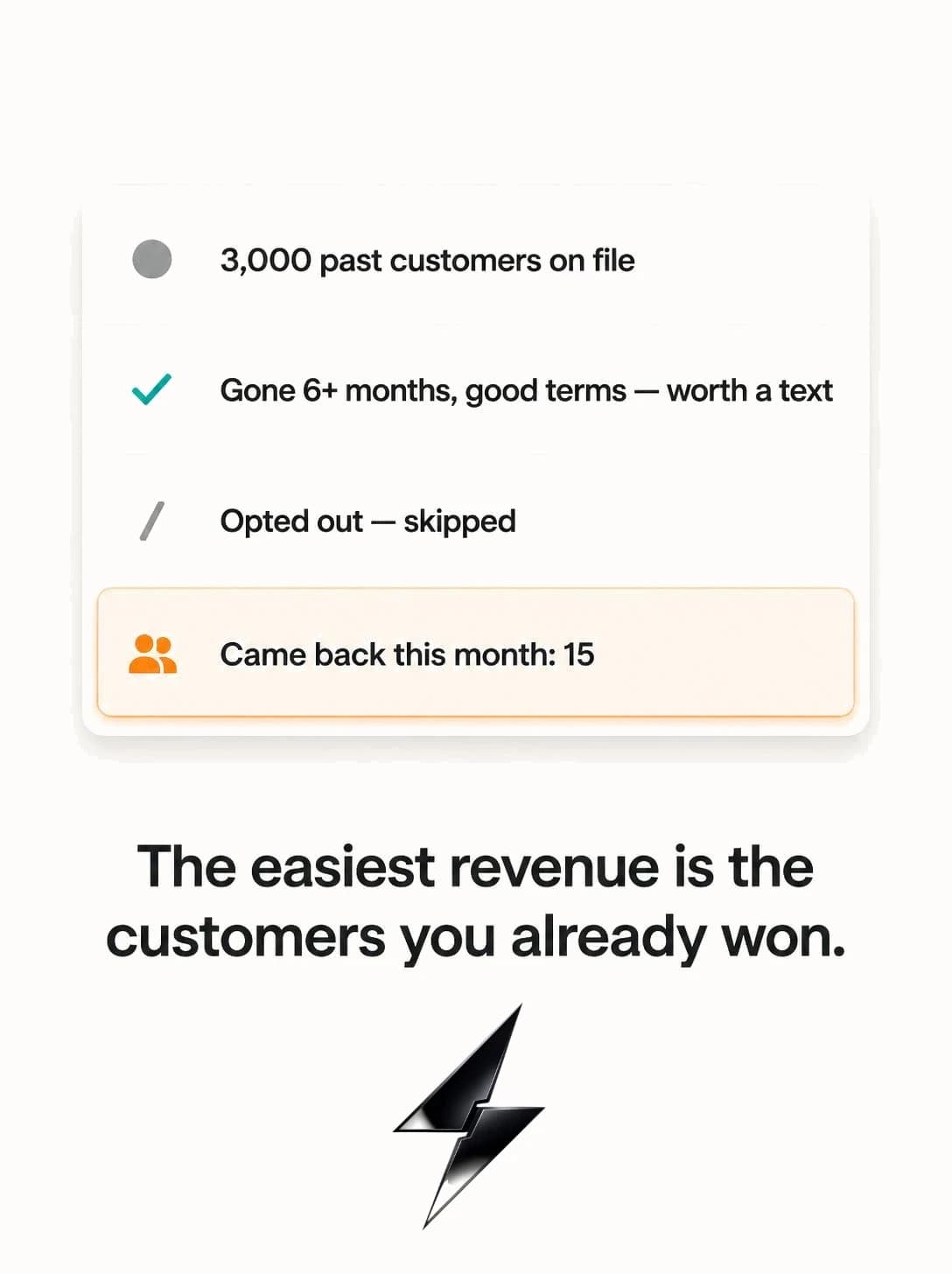
15 customers back this month · about $3,000 a month in recurring revenue recovered
Reviews are the single biggest factor in who a stranger picks — and asking is the job everybody forgets.
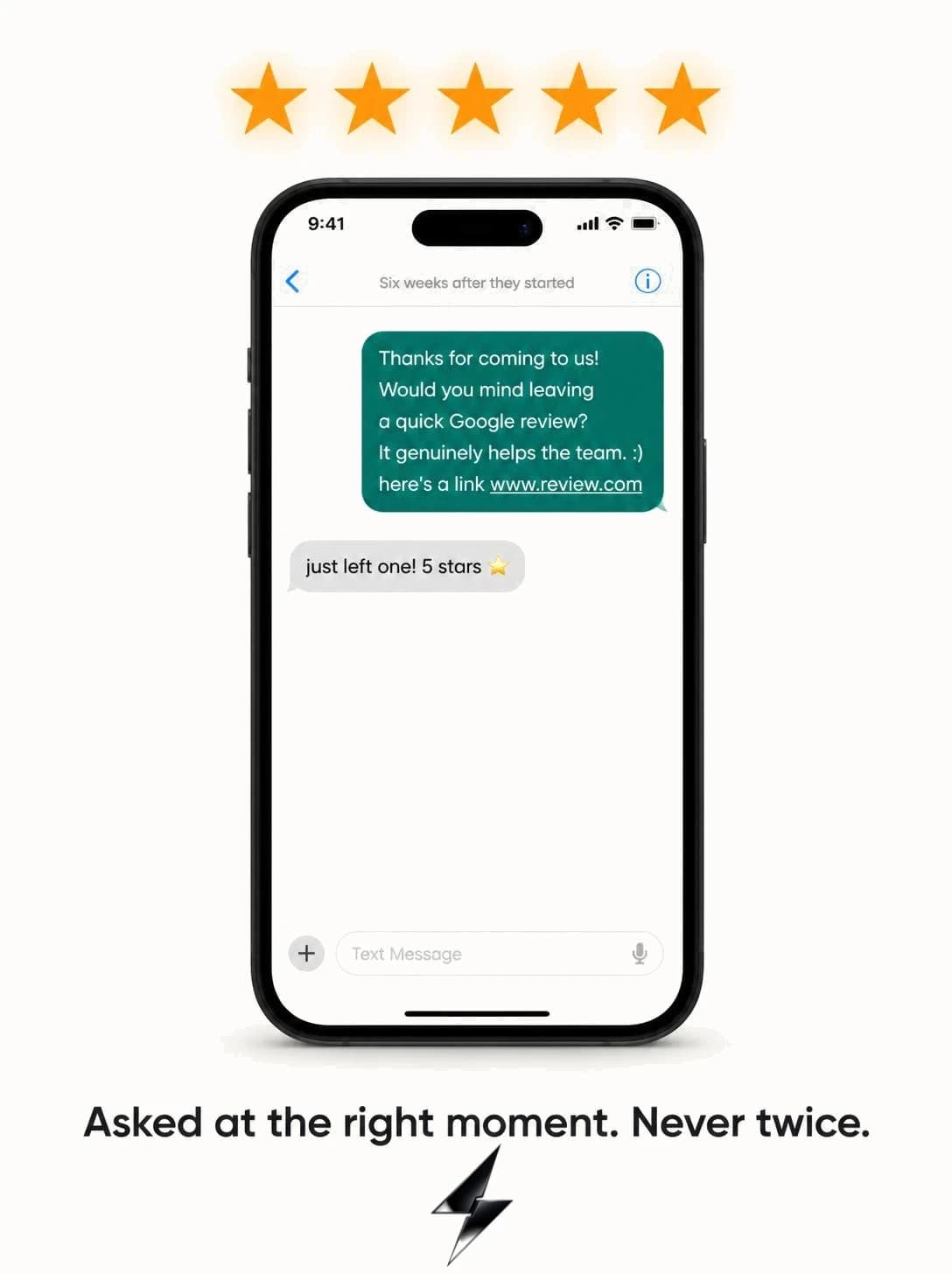
281 customers asked · 40+ new reviews in month one
A page of unanswered reviews looks like a business where nobody is home.
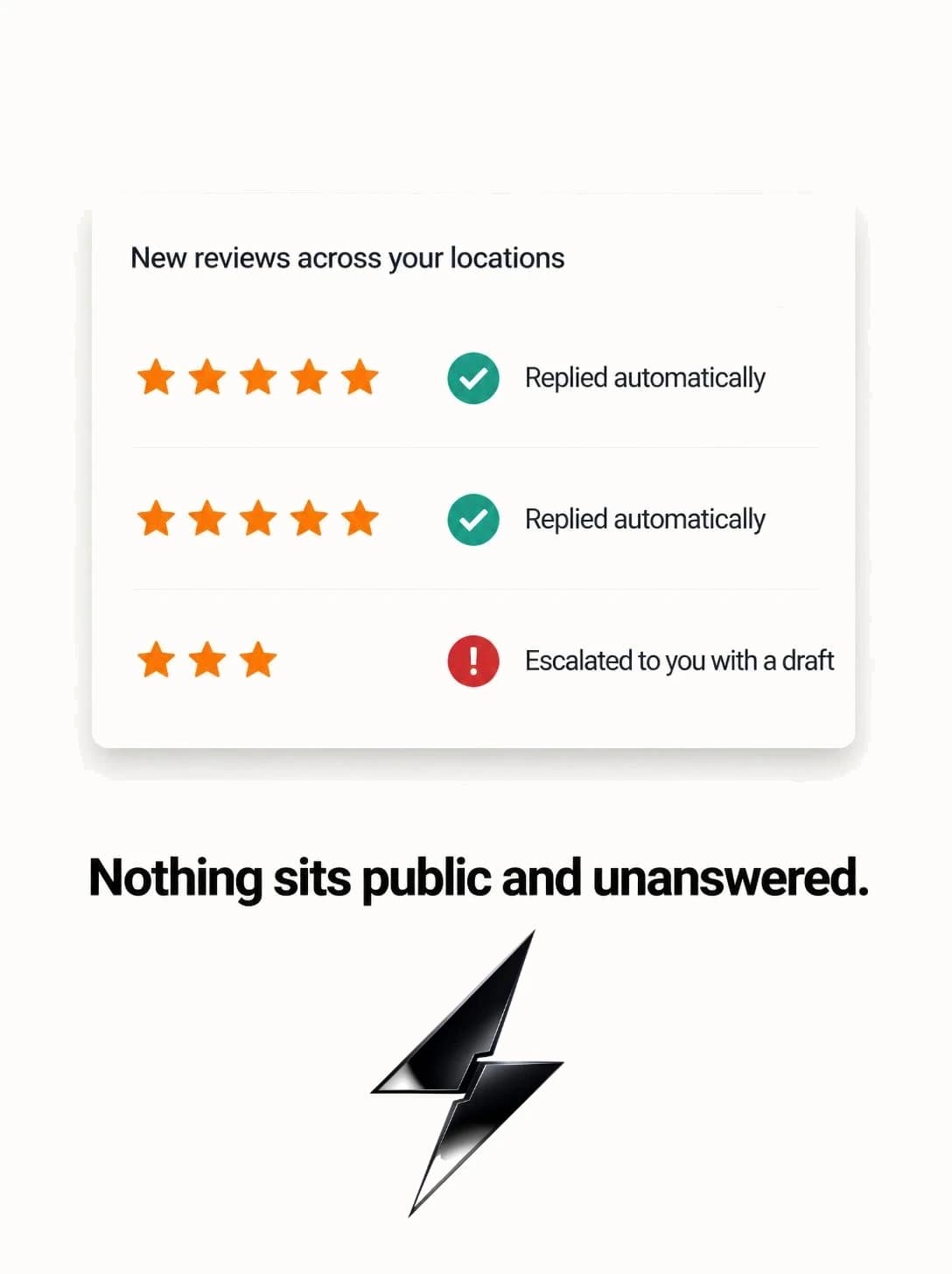
Every review answered · an active page wins the next customer
Your last post is six weeks old, and that is the first thing a prospect checks.
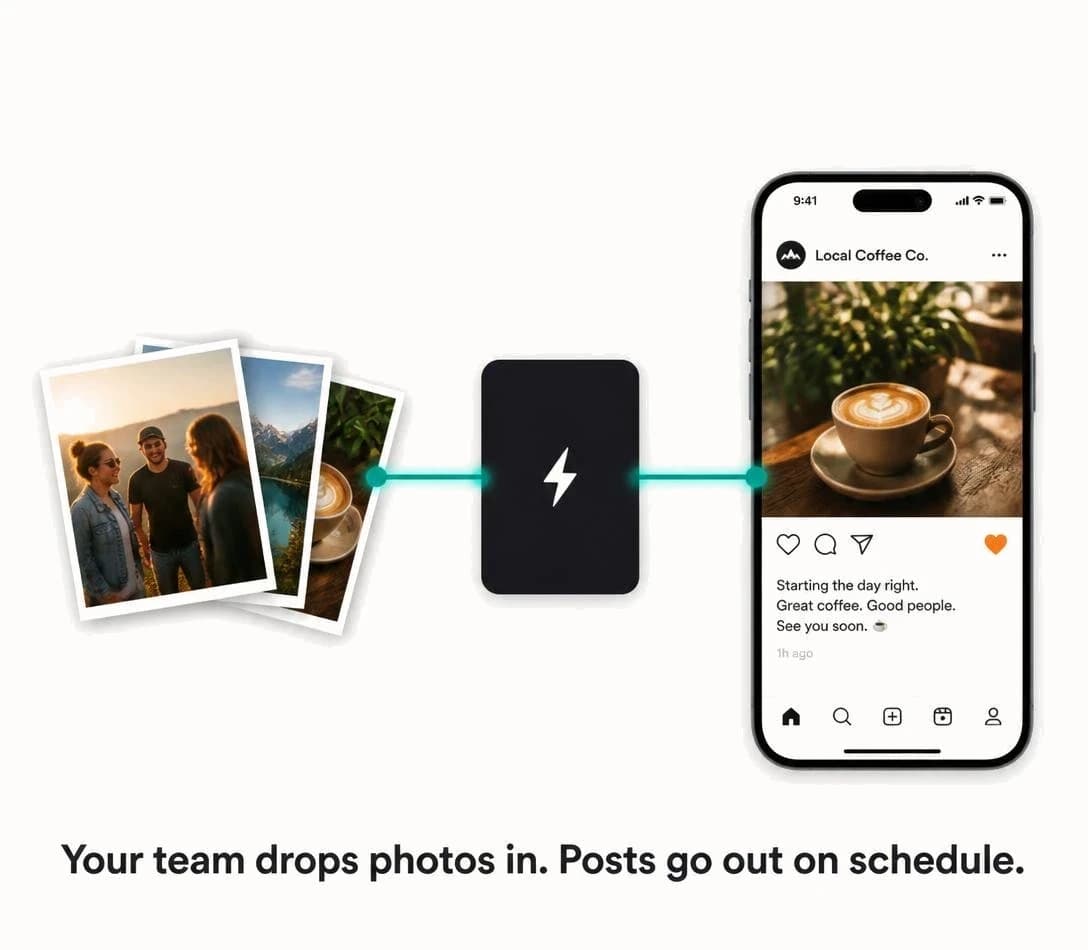
Consistent posting without anyone getting a second job
First booking lands
Onboarding stops depending on who was free
This is a sample, not a menu — every business is different, and most of what we build ends up custom. If the thing eating your week is not on this list, it is still the same job: find it, build it, watch it.
What it costs
$1,500
to build · then $297/mo
One system — invoices, reviews, win-back, whichever leaks most. You pick it, or we recommend one on the call. Built on your tools, watched daily, monthly report.
The standard
$2,500
to build · then $497/mo
The systems your business actually needs, installed and run: money chased, reviews asked, customers kept, staff trained on the parts they touch. Monthly report and a working session.
$10,000
to build · then $2,500/mo
Our full inventory adapted to your business, sales training installed, operations written down, quarterly on-site. The machine we run, in your building.
Custom
scoped on the call
Multiple locations, higher complexity, or bigger than the Whole Operation tier is built for. Same team, same standards — scoped and priced on the call.
Every fixed-price tier starts with the same free call and carries the same guarantee: live and working in 30 days, or you do not pay the build. Enterprise is scoped and timed on that same call. The monthly is month-to-month — cancel anytime.
Fit
Some of these book ahead. Some live off a phone that rings at 11pm. Either way the same three things break: follow-up nobody does, money nobody chases, and asks nobody remembers to make.
A fit
Owner-operated local service businesses.
$300K–$10M a year, 5–40 staff.
Anywhere in the US — we run these systems in our own Omaha businesses and install remotely.
30+ inbound inquiries a month that are currently being lost.
Not a fit
The honest comparison
That is the real alternative, so it is the one worth comparing against. Here is where each one actually wins.
Works nights, weekends, holidays
Forgets the follow-up
Time until it is doing the job
Costs you when it is sick or on leave
Covers four locations
Leaves and takes the knowledge with it
Judgment, warmth, hard conversations
What you pay for
We are not telling you to fire anybody. The good ones should be selling and looking after customers, not remembering to chase an invoice. That is the split.
Why work with us
Zach got here through guitar. Won a national competition in 2017, wrote a best-selling book on practice efficiency, turned teaching it into four schools. Same skill either way — find the few reps that actually move the needle, drill them until they're automatic, delete everything else. That is the method the whole company runs on.


“Zach is the real deal. One of these rare Musical Entrepreneurs who has a big heart, wants to do cool Sh!t and help people win. A systems wizard who’s crushed it with his own music teaching empire. Plug into his wisdom and watch it help you unlock the next level.”
“In just our first coaching session Zach opened my eyes to how simple delegating more of my workload whilst empowering our team could be! Since then I’ve taken action which will in turn lead to business stability and growth for my business.”
Questions
One system, built and watched: $1,500, then $297 a month. The full Client Engine — where most of the value is: $2,500, then $497 a month. Everything we run, adapted to your business, with sales training installed: $10,000, then $2,500 a month. Bigger or more complex than that, Enterprise is scoped and priced on the call. The free call confirms which fits before you spend anything.
Around four hours across the first two weeks: one session mapping how inquiries reach you today, one reviewing the replies before anything goes live, and one training your front desk. After that it runs without you.
No. We build on top of what you already pay for: your booking tool, your payment platform, your calendar. Ripping things out is how these projects die in month two, and it means learning everything twice. Your customer data never leaves your accounts.
You are hiring us. Your customer data is yours and stays exportable, always. The systems themselves are ours to build, run and keep working, and that is the point — you are not taking on another tool to maintain, you are taking on the team that maintains it.
Cancel anytime — the monthly is month-to-month, no contract. When you stop, the systems stop running: the monthly is what keeps them watched, fixed and tuned, and we will not leave automation running unwatched against your customers. Your data stays yours and exportable, and every tool and account of your own stays exactly as it was.
One call, 30 minutes, and it exists so you can hear the exact price and plan before spending anything. No deck. The free look at your business happens first, and you keep that read whether or not we ever talk again. If it is not a fit, the call is where we tell you so.
No — keep them. An agency gets strangers to notice you. We handle what happens after: the follow-up, the invoice chasing, the review asks, the way the place runs. We do not run your ads, and the posting we do is operational — your photos, published consistently — not campaign strategy.
It is built, live and working inside 30 days, or you do not pay the setup. That is a thing we control, so we can promise it. We will not guarantee your revenue, because your revenue depends on things we do not control, and anybody who guarantees it is promising you something they cannot keep.
If you are getting fewer than about thirty inquiries a month, this is the wrong problem to solve. There is nothing for the system to respond to, and you would be automating an empty pipeline. Fix demand first — we will tell you that on the call.
We are customers of our own work: four locations, $1.5M a year, every system here running in them first. And no longer our only customer — our first outside client, a two-location school owner in the Carolinas, pays us $2,000 a month for the same work, remotely, as a founding exception. Anthony DiMauro, the other half of the team, closes $5M a year in sales and trains sales teams for a living.